
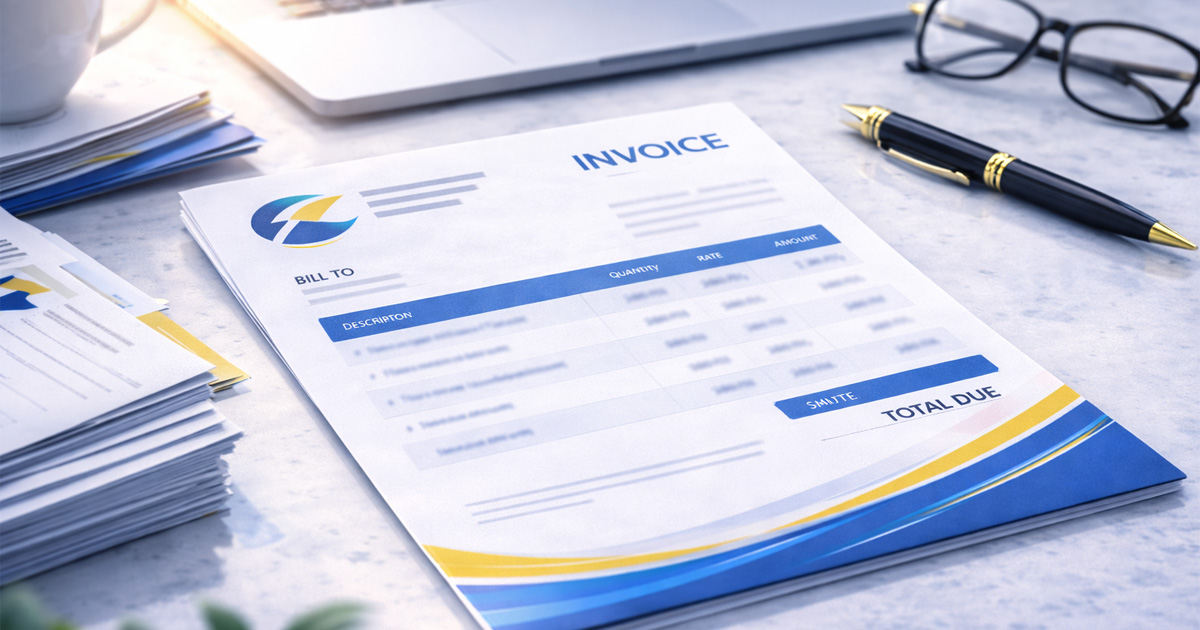
Custom Invoice Design and Its Role in Professional Branding
Custom Invoice Design
Custom invoice design is often underestimated within the broader discussion of branding and business development. Companies routinely invest in website design, logo creation, advertising strategy, and digital presence, yet many rely on default billing templates when it comes time to request payment. This disconnect can quietly weaken the overall perception of professionalism that other branding efforts are designed to establish.
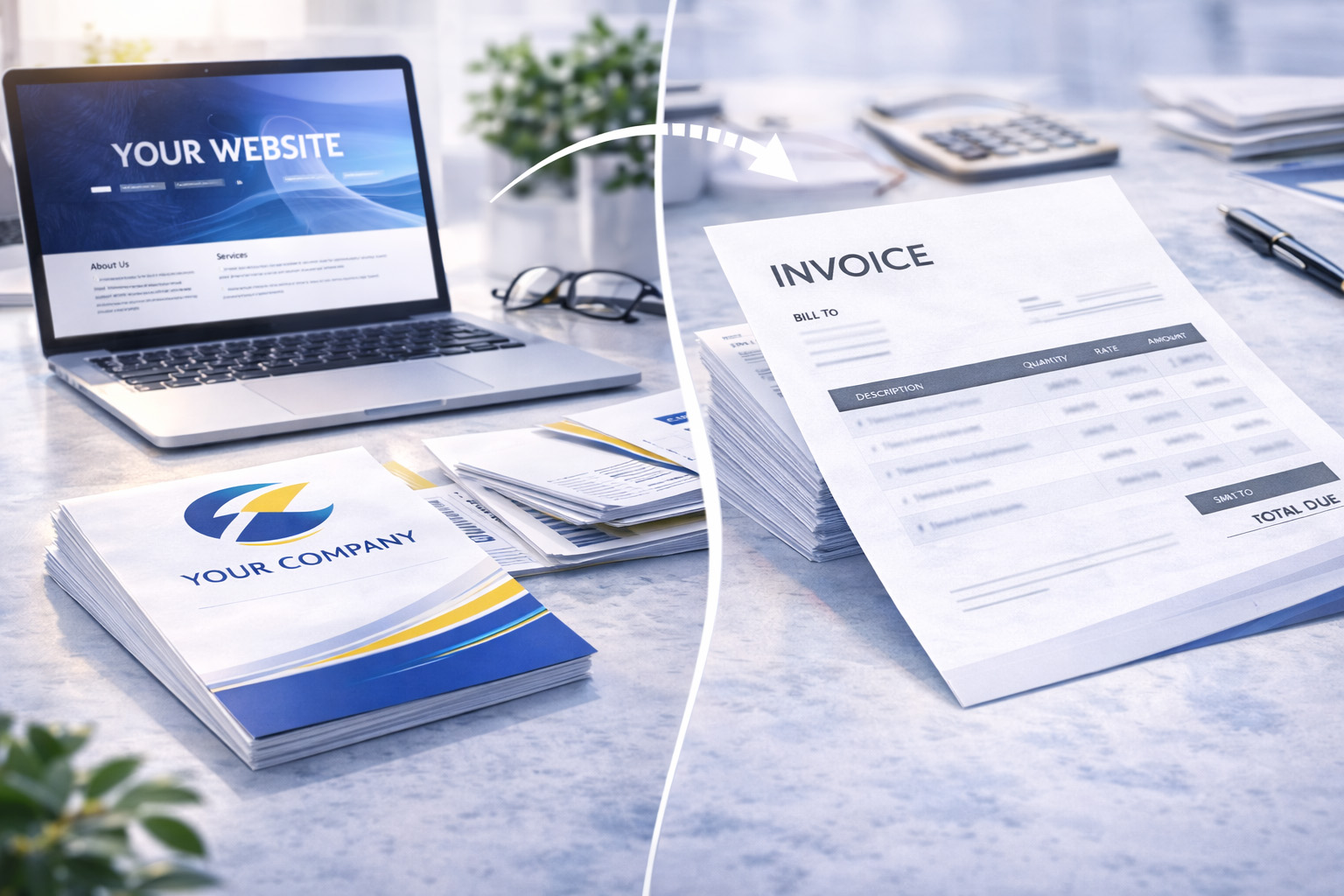
An invoice represents the financial conclusion of a service interaction. It confirms that work has been completed and that compensation is due. Because of this, the invoice becomes one of the most scrutinized documents a business sends. Custom invoice design ensures that this critical touchpoint reinforces clarity, credibility, and brand consistency rather than undermining it.
Why Invoice Design Matters
Invoices are rarely read casually. Clients review them with attention to detail, examining service descriptions, dates, rates, quantities, taxes, subtotals, and final totals. Even minor ambiguity within this structure can create friction. Questions about formatting or unclear calculations may delay payment or require follow-up communication. A professionally designed invoice anticipates these points of confusion and eliminates them through thoughtful organization and hierarchy. Clear alignment of line items, logical grouping of services, and prominently displayed totals reduce cognitive strain for the reader. When an invoice communicates information efficiently, it not only improves the client experience but also supports faster payment cycles and smoother financial operations.

Beyond functionality, invoice design influences perception. The document communicates whether the business appears organized, established, and attentive to detail. A cluttered or inconsistent invoice can subtly erode confidence, even if the underlying work was delivered professionally. In contrast, a structured and visually aligned invoice strengthens the impression that the company operates with discipline and transparency.
What a Well-Designed Invoice Represents
An invoice is more than a billing statement. It represents structure, accountability, and financial clarity. Clients often associate the presentation of documentation with the competence of the organization itself. When an invoice is carefully formatted and easy to understand, it signals that internal systems are equally structured. Clear labeling of services and transparent calculation of totals reinforce the perception that the business manages its operations with precision.

Professional invoice design also communicates fairness. When charges are itemized clearly and organized logically, clients are less likely to question pricing integrity. Transparency builds trust. Trust reduces resistance. Over time, consistently structured invoices contribute to a sense of reliability that strengthens long-term client relationships.
The Strategic Elements of Effective Invoice Design
Effective invoice design relies on several foundational principles that determine how well the document performs in real-world situations. Hierarchy is central. The company name, invoice number, issue date, due date, and total amount should be immediately identifiable. These elements guide the reader’s attention and establish orientation within seconds of viewing the page. Typography must remain readable and restrained. Decorative fonts may undermine clarity, particularly when used in data-heavy sections. Consistent font sizing and spacing ensure that the invoice remains legible both digitally and in print.

White space is equally important. A crowded invoice can overwhelm the reader and obscure critical details. Strategic spacing between sections enhances comprehension and creates visual breathing room. Alignment and proportion must be carefully considered to prevent the layout from feeling unbalanced. These design decisions may appear subtle, but collectively they shape how the document is perceived and understood.
Color usage should align with the company’s established brand palette without interfering with readability. Accent colors may be used to highlight totals or headings, but they must remain restrained and consistent. When design elements are applied intentionally rather than arbitrarily, the invoice feels cohesive and professional.
Professional Invoice Design and Brand Consistency
Branding extends far beyond marketing materials. It includes every document that carries the company’s name. When invoices align visually with the logo, letterhead, envelopes, proposals, and website design, the brand feels unified. This cohesion strengthens recognition and reinforces credibility. Clients subconsciously evaluate consistency as a marker of reliability. When the same typography, color system, and layout logic appear across all materials, the business appears organized and intentional.

Inconsistent documentation can weaken this perception. An invoice that looks disconnected from other branded assets creates subtle friction in the client experience. Even if the discrepancy is minor, it disrupts the visual narrative the brand is building. Custom invoice design eliminates that disconnect by embedding brand standards into the billing process itself.
The Risks of Generic Invoice Templates
Generic templates are designed for convenience rather than strategic alignment. While they may provide a functional starting point, they often lack customization that reflects a company’s identity. Default fonts, rigid layout structures, and limited formatting flexibility can produce invoices that feel impersonal or generic. Over time, this lack of alignment weakens brand cohesion.

Generic templates may also introduce practical limitations. They can restrict the ability to organize services clearly, highlight payment terms effectively, or adjust layout proportions to accommodate business-specific needs. These constraints may result in cluttered sections or confusing calculations. Although these issues may seem minor, they accumulate across repeated client interactions and subtly influence perception.
Invoice Design as a Business Efficiency Tool
Beyond branding considerations, professional invoice design improves operational efficiency. When invoices are structured logically, clients spend less time interpreting charges. Reduced confusion leads to fewer follow-up inquiries and disputes. Clear payment terms and prominently displayed totals support faster decision-making and quicker payment processing. This efficiency benefits both the client and the business.

Internally, standardized invoice design simplifies accounting workflows. Consistent formatting improves recordkeeping accuracy and reduces the likelihood of errors. When design supports clarity, it also supports productivity. Over time, these operational improvements contribute to measurable financial impact.
Invoice Design Within a Broader Branding System
Invoice design functions most effectively when integrated into a comprehensive branding system. The visual direction established by the logo should extend naturally into business cards, letterhead, envelopes, presentation templates, and digital assets. Each document reinforces the others, creating a unified identity across every interaction. When clients encounter the same visual cues repeatedly, recognition strengthens. Familiarity builds comfort. Comfort reduces perceived risk.

Brand equity develops gradually through consistent exposure to cohesive visual standards. Each invoice sent becomes a reinforcement of those standards. Over months or years, recurring clients associate the structured presentation of invoices with reliability and professionalism. This association contributes to long-term brand strength that extends beyond individual transactions.
When to Introduce or Upgrade Custom Invoice Design
Businesses often revisit invoice design during periods of transition. Launching new services, updating a logo, undergoing rebranding initiatives, or expanding into new markets can all justify a review of billing documentation. Growth frequently introduces complexity into service offerings and pricing structures. A thoughtfully redesigned invoice can accommodate that complexity while maintaining clarity.

Organizations seeking to elevate their positioning may also benefit from upgrading invoice design. As pricing increases or client expectations evolve, documentation must reflect that elevated standard. A refined invoice communicates maturity and readiness for larger contracts or partnerships.
The Long-Term Value of Professional Invoice Design
Compared to large-scale marketing campaigns or operational restructures, custom invoice design represents a modest investment. Yet its influence extends into every client relationship. Each invoice reinforces brand identity. Each document contributes to repetition. Each repetition strengthens recognition and authority.
Over time, these seemingly small interactions accumulate into meaningful brand equity. Professional invoice design ensures that the final stage of a client engagement reflects the same level of intentionality as the first. In doing so, it protects the integrity of the brand and supports both financial clarity and long-term credibility within the marketplace.
Invoice Design
Want your invoices to look professional, branded, and easy to understand?