Why Coordinated Promotional Graphics Matter for Marketing Campaigns
Coordinated Promotional Graphics
When businesses plan a promotion, the first focus is usually the message itself. A company may be preparing for a grand opening, announcing a new product, hosting a community event, or launching a seasonal sale. The idea behind the promotion often develops quickly, and excitement builds around getting the message out to potential customers.
Soon afterward, a practical question arises: how should the promotion be presented to the public?
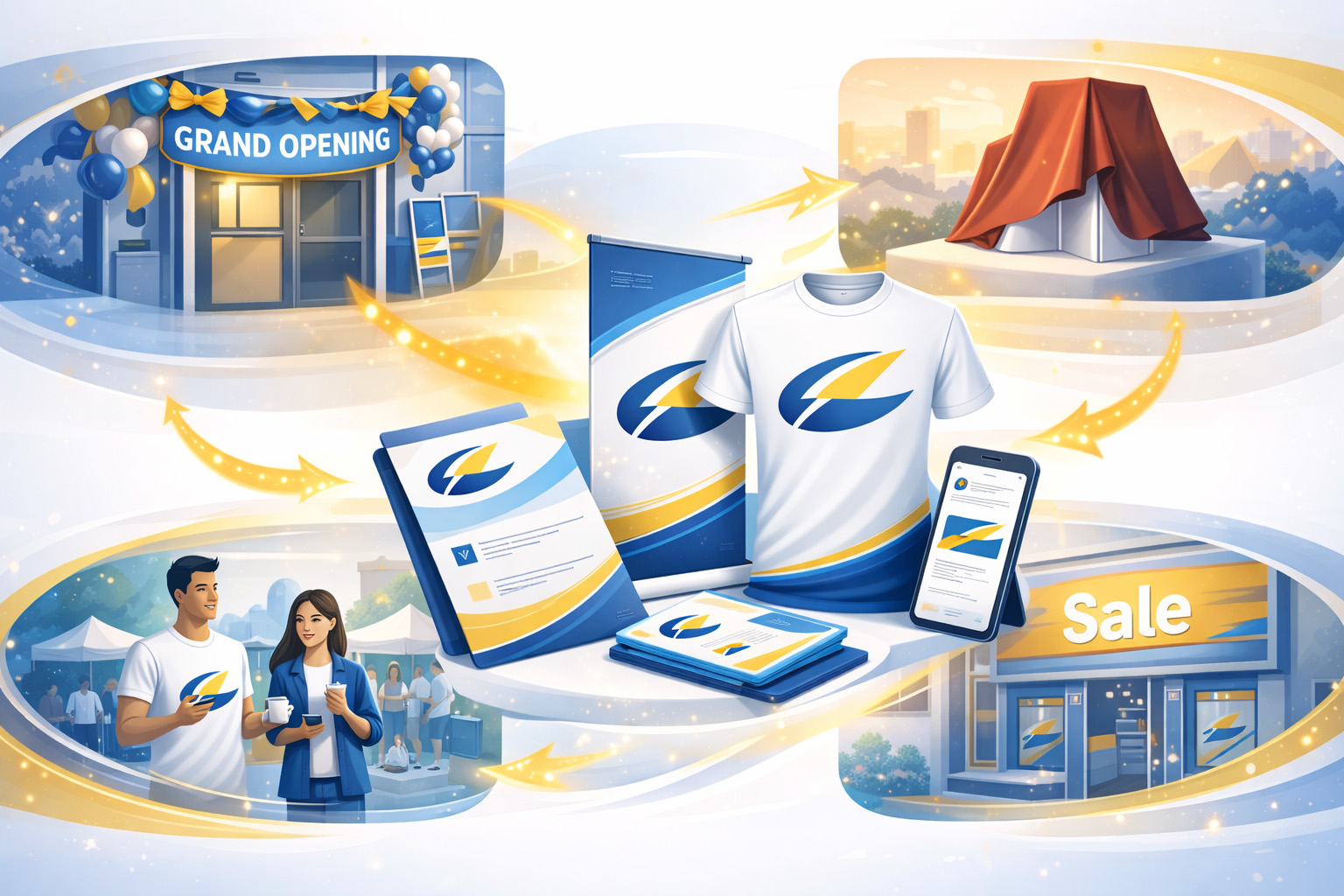
Promotional campaigns rarely rely on a single communication channel. Businesses frequently need several marketing materials at the same time. Flyers may be distributed locally to raise awareness. A banner may be displayed at an event or storefront to capture attention. Social media graphics may be posted online to reach a wider audience. Promotional apparel may be worn by staff or volunteers during the event.
Each of these items plays a role in spreading the message, but they are often created independently. A flyer might be designed first, followed by a banner once the event location is confirmed. Social media graphics might be assembled quickly to announce the promotion online. Apparel graphics might be handled through a separate vendor who focuses on printing rather than design.
Although this step-by-step process is common, it frequently leads to promotional materials that feel loosely related rather than intentionally coordinated. The result may not appear dramatically inconsistent, but subtle differences accumulate across the campaign. Colors may shift slightly between designs. Typography may change. Graphic elements may feel similar without matching exactly.
Individually these details may seem minor, yet collectively they influence how audiences perceive the professionalism and organization of the promotion. When marketing materials share a clear visual structure, they reinforce one another and strengthen the campaign’s identity. When they appear disconnected, the campaign can feel fragmented and less memorable.
Understanding how promotional graphics function together can help businesses create marketing campaigns that appear more cohesive, professional, and effective.
The Continued Importance of Print Marketing Materials
In an era dominated by digital advertising, it can be easy to assume that printed promotional materials are becoming obsolete. In reality, print marketing continues to play a valuable role in many campaigns, particularly those that involve local audiences or physical events.
Printed graphics create visibility in environments where digital messaging may not reach people directly. A flyer posted in a community space, placed on a counter, or handed to potential customers can communicate information quickly and clearly. A banner displayed at a storefront or event booth can capture attention from across a room or across a street. Promotional apparel worn by staff or volunteers can make a business recognizable within a crowd.

These materials operate in physical environments where potential customers are already present. Unlike digital advertising, which must compete for attention on crowded screens, printed graphics occupy real-world spaces where they can draw the eye naturally.
Because of this, print promotion remains particularly effective for events, community initiatives, seasonal sales, and local business campaigns. When designed well, printed materials provide a tangible representation of the campaign that audiences can see repeatedly during their daily routines.
However, printed promotional graphics require thoughtful design in order to achieve their intended impact. Layout structure, visual hierarchy, color usage, and typography all influence how easily the message can be understood from a distance or at a glance.
Businesses that treat printed promotional materials as an afterthought often miss an opportunity to create strong visual communication in the environments where their audiences already spend time.
The Role of Social Media in Modern Promotions
While print materials provide visibility in physical spaces, social media extends the reach of a promotion into digital environments where audiences interact daily.
Platforms such as Facebook, Instagram, and LinkedIn allow businesses to share announcements, promote events, highlight special offers, and encourage customers to spread the word within their own networks. A single well-designed graphic can travel quickly through shares and reposts, increasing the campaign’s visibility beyond the immediate geographic area.

Because social media posts are often the first digital introduction to a promotion, their visual quality matters significantly. A social graphic that appears inconsistent with the rest of the campaign may confuse viewers or weaken the professional impression that printed materials create.
When social media graphics reflect the same visual style as printed promotional materials, the campaign becomes easier to recognize across multiple interactions. Someone who sees a flyer in person may later notice a similar design in their social media feed and immediately recognize the connection.
This visual continuity strengthens the overall campaign message and helps audiences remember the promotion.
Why Campaign Graphics Often Become Inconsistent
Inconsistency in promotional materials rarely occurs intentionally. Instead, it usually develops gradually as businesses create marketing pieces over time.
A flyer may be designed first because it is needed for immediate distribution. Later, a banner might be required for an event location. The designer or vendor producing the banner may interpret the flyer’s visual style slightly differently. Social media graphics may be created quickly to accompany the announcement online, sometimes by another person or using a template.

Each of these decisions appears reasonable on its own, but small variations accumulate throughout the campaign. A different font may be used for headlines. Colors may not match precisely between digital and printed versions. Layout structures may follow different visual logic.
Over time, the promotional materials may appear related but not truly unified. Audiences may not consciously identify these inconsistencies, but the overall campaign may feel less organized or less professional than it could be.
This issue becomes particularly common when businesses work with multiple vendors for different promotional materials, such as separate providers for printing, apparel, and digital graphics.
Designing Promotional Materials as a Unified Campaign
A more effective approach involves designing promotional materials as part of a coordinated campaign from the beginning.
Instead of treating each piece as an independent project, the design process establishes a visual framework that applies across all campaign graphics. This framework typically includes the campaign’s color palette, typography, layout structure, and supporting graphic elements.

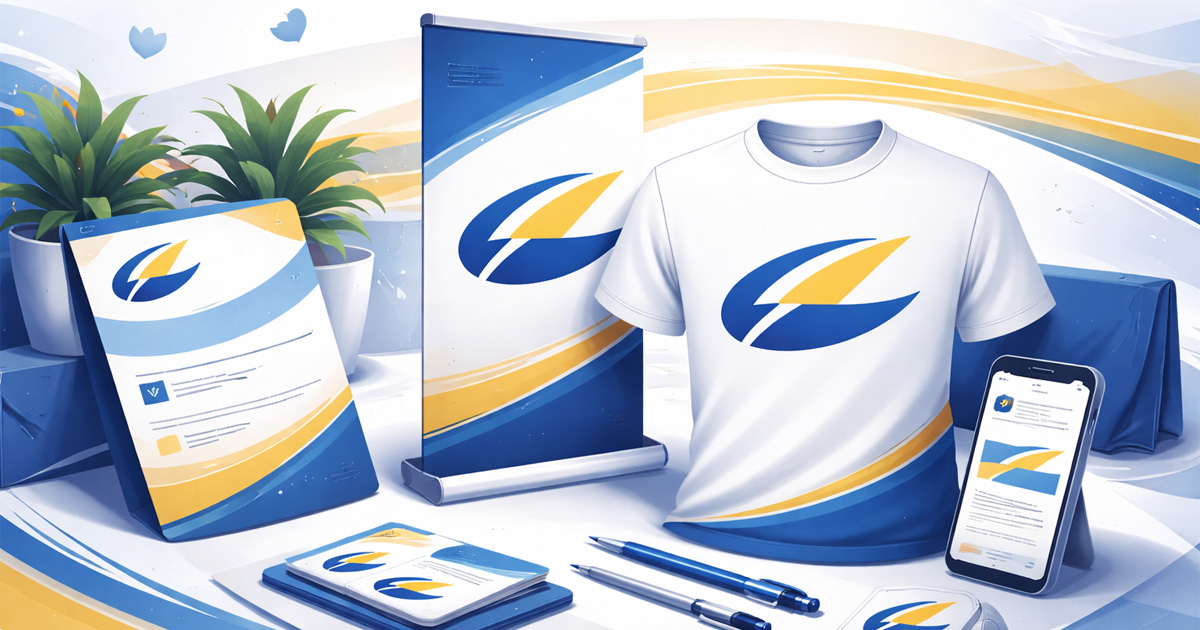
Once these visual components are defined, they can be adapted to multiple formats. The flyer may present detailed information about the event or promotion. The banner may emphasize bold visual impact for long-distance visibility. The shirt design may focus on a simplified graphic that remains recognizable when worn. Social media graphics may translate the same visual language into digital formats suitable for online platforms.
Because each piece originates from the same design system, the campaign naturally appears more cohesive. Audiences encountering different materials quickly recognize that they belong to the same promotional effort.
This unified approach not only improves visual consistency but also simplifies the design process itself. Rather than developing separate concepts for each item, the designer establishes one clear direction that guides all campaign graphics.
How Visual Consistency Strengthens Recognition
One of the most important advantages of coordinated promotional graphics is the way they strengthen recognition among audiences.
Human perception responds strongly to repetition. When people encounter the same visual elements repeatedly, those elements become easier to recognize and remember. Colors, shapes, and typography can function as visual signals that link multiple pieces of communication together.

Promotional campaigns benefit significantly from this principle. A person who sees a banner at an event may later notice the same color scheme in a social media post. Someone who receives a flyer may later recognize the same graphic on a promotional shirt.
These repeated visual cues help audiences connect different encounters with the same campaign. Rather than seeing unrelated advertisements, they experience a consistent message presented through multiple formats.
Over time, this consistency increases the likelihood that the promotion will remain memorable long enough for audiences to take action.
Efficiency in Promotional Campaign Preparation
Promotional campaigns often operate under tight timelines. Events occur on specific dates, product launches follow production schedules, and seasonal promotions depend on limited windows of opportunity.
When marketing materials are handled independently, the design process can become fragmented. Each item requires its own project setup, communication cycle, and revision process. Coordinating multiple design projects simultaneously can slow the campaign’s preparation.

Developing promotional graphics together as part of a coordinated campaign can streamline this process. The visual direction is established once and applied across multiple materials, reducing repetition and simplifying communication.
This efficiency allows businesses to move more quickly from planning to promotion, ensuring that the campaign has sufficient time to reach its intended audience.
Promoting Both Physical and Digital Promotion
Modern marketing campaigns often succeed when they combine both physical and digital communication channels.
Printed materials create visibility in real-world environments where potential customers interact with businesses directly. Social media graphics extend the campaign into digital networks where messages can travel rapidly through online sharing.

When these two environments support the same visual identity, the campaign becomes easier to recognize regardless of where audiences encounter it. The flyer seen at a local café may resemble the social media graphic shared online. The banner displayed at an event may match the imagery appearing in promotional posts.
This continuity helps the campaign feel organized and intentional, strengthening its impact across multiple platforms.
Filling the Gap Between Print and Digital Design
One challenge many businesses encounter today is finding design support that addresses both print and digital promotional needs.
As marketing agencies increasingly focus on online advertising, some traditional promotional materials receive less attention. Businesses may struggle to find designers who can create professional flyers, banners, and apparel graphics while also supporting digital communication such as social media posts.

This gap often forces businesses to coordinate multiple vendors or rely on template-based solutions that do not fully align with their brand or campaign goals.
Working with a designer who understands both print and digital promotional graphics can help bridge this gap and create a more cohesive marketing effort.
Conclusion
Promotional campaigns rely on multiple visual elements working together to communicate a clear message. Flyers, banners, promotional apparel, and social media graphics each contribute to the visibility and recognition of a campaign.
When these materials are created independently, businesses often encounter coordination challenges and subtle inconsistencies that weaken the overall impression of the promotion. Designing promotional graphics as part of a unified campaign can help strengthen visual consistency, streamline preparation, and improve audience recognition.
By approaching promotional materials as parts of a coordinated system rather than separate projects, businesses can present their message more effectively across both physical and digital environments.
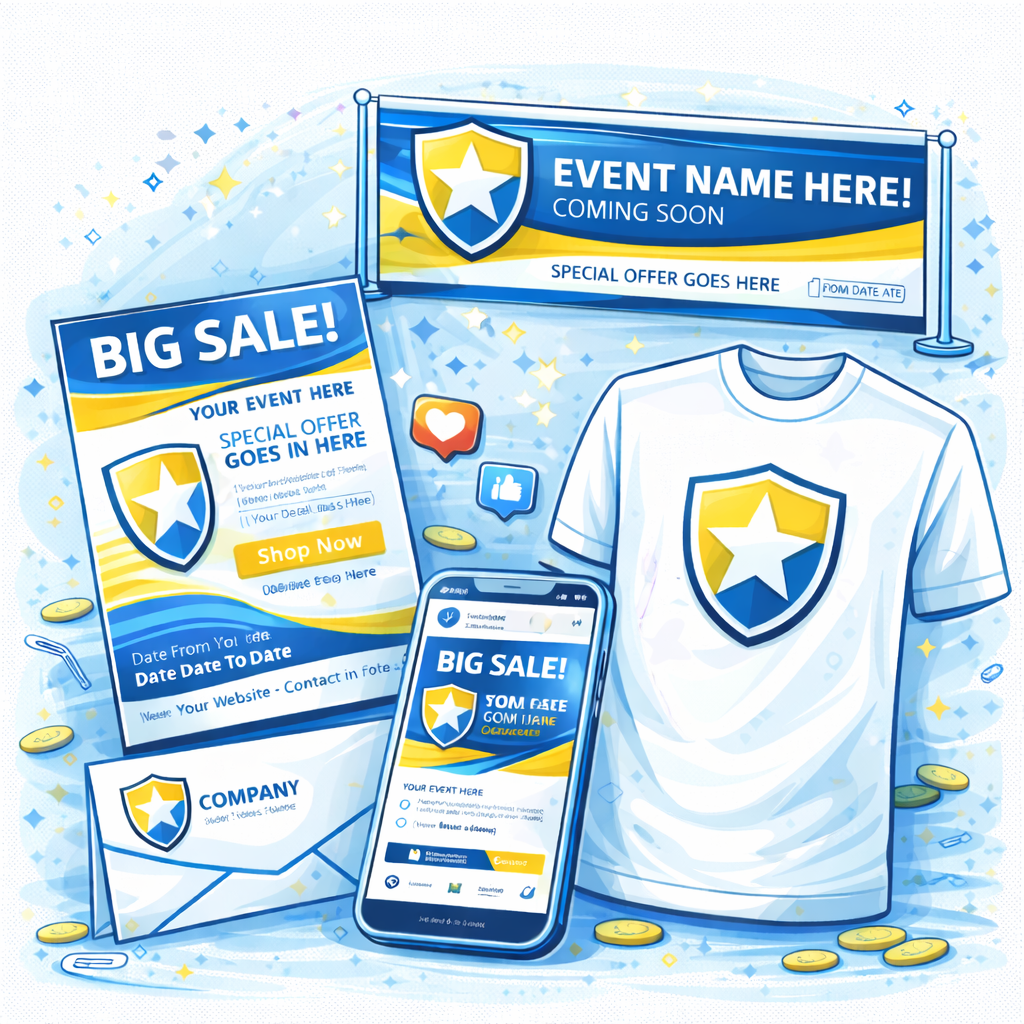
Marketing Promo Pack
The Marketing Promo Pack is best for events, seasonal promotions, product launches, and special campaigns where visibility matters fast. This package includes Flyer Design, Banner Design, Social Post Design, and T-shirt Design, giving you a cohesive set of promotional assets that work together online and in the real world to grab attention, reinforce your brand, and help your message actually get noticed. The "best bang for your buck" when launching your event, etc.