
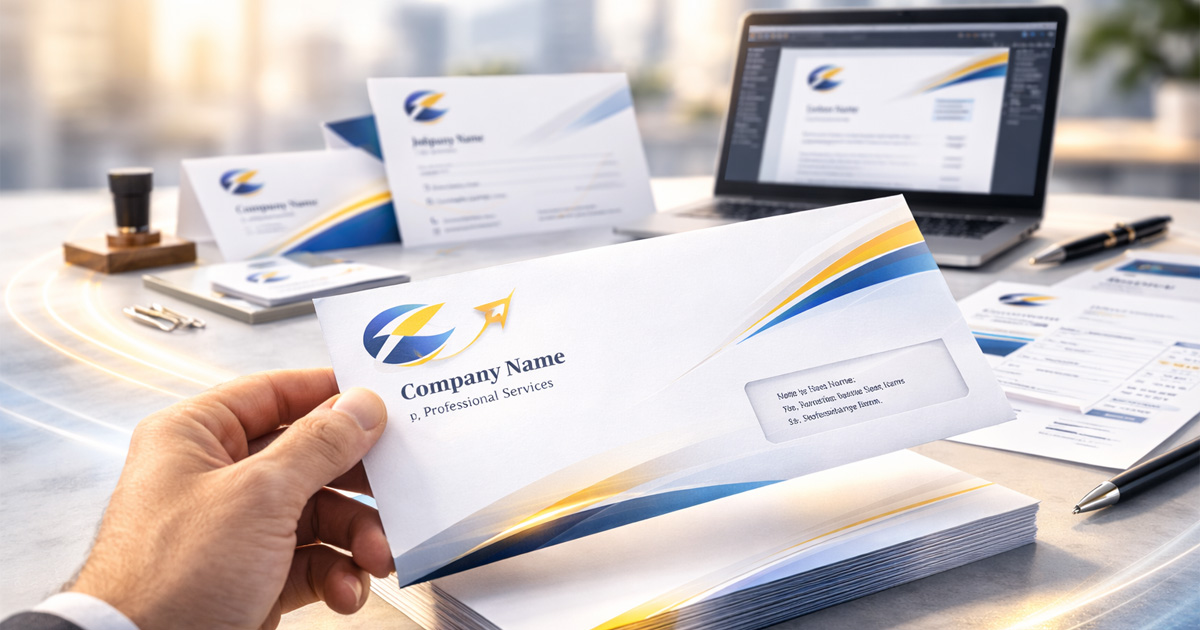
Professional Envelope Design and Why It Still Matters in Modern Branding
Professional Envelope Design
In today’s digitally driven business environment, it is easy to assume that physical mail has lost relevance. Email, electronic signatures, and cloud-based document sharing dominate day-to-day communication. Yet despite the convenience of digital channels, physical mail continues to play an important role in formal business interactions. Proposals, invoices, contracts, legal notices, checks, and official correspondence are still routinely delivered in printed form. In these moments, envelope design becomes the very first visual interaction someone has with your brand.

Professional envelope design is often underestimated because it appears simple on the surface. An envelope is, after all, just a container for a document. However, from a branding perspective, it serves as a visual introduction. Before the recipient reads a single word inside, they form an impression based on the quality, layout, and branding of the envelope itself. That impression influences how the contents are perceived.
For businesses seeking credibility, consistency, and authority, custom envelope design remains an important component of a complete branding system. When thoughtfully developed, it reinforces professionalism, strengthens recognition, and supports brand cohesion across every printed touchpoint.
What Envelope Design Actually Represents
An envelope represents far more than a mailing vehicle. It communicates structure, legitimacy, and attention to detail. In many industries, the arrival of a document carries weight. Legal firms, consulting agencies, engineering companies, medical practices, nonprofit organizations, financial service providers, and construction businesses routinely send documents that require seriousness and clarity. The envelope frames that interaction.

When a recipient receives mail in a clean, professionally branded envelope, the business immediately appears organized and established. The consistent placement of a logo, return address, and visual elements signals that the company operates with intention. In contrast, a plain envelope or one with mismatched design elements may subtly undermine confidence before the document is even opened.
The envelope functions as the outer layer of brand communication. Just as packaging influences perception in retail environments, envelope design shapes perception in business correspondence. It sets the tone for what follows.
The Strategic Role of Envelope Design in Branding
Branding is not built solely through advertising campaigns or website design. It is reinforced through repetition and consistency across every interaction. Envelope design plays a strategic role in that repetition.
When the same logo, typography, and color palette appear on business cards, letterhead, invoices, proposals, and envelopes, the brand feels cohesive. That cohesion strengthens recognition. Recognition reduces perceived risk. Clients and partners are more comfortable engaging with businesses that appear consistent and organized.

Envelope design also supports visual hierarchy. The placement of return information, alignment of branding elements, and use of white space all contribute to readability. A professionally designed envelope avoids clutter and ensures that key information is easy to identify. This clarity communicates competence.
For companies sending regular correspondence, envelope design becomes part of daily brand reinforcement. Each time mail is received, the brand impression is renewed.
Why Envelope Design Still Matters in a Digital Environment
The rise of digital communication has changed how businesses operate, but it has not eliminated physical mail. In fact, physical mail often carries more significance precisely because it is less common. When clients receive something tangible, it commands attention.

Invoices mailed to clients, checks sent to vendors, formal agreements, and regulatory documentation are frequently delivered in printed form. In these cases, envelope design maintains authority. A branded envelope signals that the contents are official and important.
Even when documents are primarily delivered digitally, there are moments when printed materials are necessary. Marketing campaigns may include direct mail. Event invitations may require physical delivery. Corporate announcements or shareholder communications often arrive in branded envelopes. In each of these scenarios, envelope design contributes to the professionalism of the interaction.
In a crowded digital landscape, physical materials can stand out. When those materials are thoughtfully branded, they create memorable impressions.
The Risks of Generic or Unbranded Envelopes
Many businesses default to generic envelopes to reduce costs or simplify logistics. While this approach may seem practical, it can weaken brand presentation over time.
Generic envelopes often lack visual alignment with other materials. The logo may not appear at all, or it may be applied inconsistently through stickers or stamps. Return address formatting may not match established typography standards. Margins and spacing may appear unbalanced. These inconsistencies create subtle friction in the brand experience.

Although each individual detail may seem minor, the cumulative effect can dilute brand cohesion. When a company invests in professional logo design, website development, and stationery but overlooks envelope design, the overall presentation becomes fragmented.
Professional envelope design ensures that every piece of outgoing mail reinforces the same structured identity. Rather than appearing improvised, communication feels intentional.
What Goes Into Professional Envelope Design
Designing effective envelopes involves more than placing a logo in the upper corner. Professional envelope design considers alignment, proportion, print standards, and mailing requirements.
The process begins with alignment to the existing brand system. Designers evaluate the logo’s placement options to ensure visibility without overwhelming the layout. Color usage must remain consistent with established palettes while avoiding interference with postal regulations or readability requirements.

Typography choices are equally important. Return addresses must be clear and legible at various sizes. Spacing must allow for proper placement of recipient information while maintaining balance. White space should be preserved to prevent visual clutter.
Envelope design also requires understanding standard sizes and printing methods. Different envelope formats such as #10 business envelopes, window envelopes, large document mailers, and invitation envelopes require slightly different layout considerations. A professional design accounts for these practical variables while preserving brand integrity.
The goal is to create an envelope that feels refined, readable, and aligned with the rest of the brand system.
Envelope Design as a Brand Authority Tool
Brand authority is built gradually through repeated positive interactions. Every official document sent under a company’s name contributes to that authority. When envelopes consistently display structured branding, authority accumulates.

Clients often retain documents for records, especially contracts and invoices. The envelope in which those documents arrive becomes part of that retained experience. Each time the client encounters the brand in printed form, familiarity deepens.
Familiarity fosters trust. Trust reduces hesitation in future transactions. Over time, even small details such as envelope presentation contribute to long-term brand equity.
Businesses that prioritize these details signal that they care about the complete experience, not just the transaction itself.
Integrating Envelope Design Into a Broader Branding System
Envelope design functions most effectively when integrated into a comprehensive branding framework. The visual direction established by the logo should extend naturally into letterhead, business cards, invoices, presentation templates, and digital assets.

When branding elements are unified, design decisions become more efficient. Established layout principles can be applied consistently across new materials. Designers can build from a defined system rather than starting from scratch each time.
This integration also enhances professionalism. When clients encounter consistent visual identity across printed and digital materials, the business appears organized and intentional. There is no confusion about tone or positioning. Every asset reinforces the same brand message.
Envelope design, though simple in structure, plays a key role in maintaining that cohesion.
When to Introduce or Refresh Custom Envelope Design
Businesses often consider custom envelope design during periods of growth or transition. Launching a new company, updating a logo, rebranding, expanding service offerings, or entering new markets are all appropriate times to evaluate printed materials.

Introducing professional envelope design signals maturity. It communicates readiness for larger contracts and formal partnerships. For businesses upgrading from generic envelopes, the improvement in presentation is often immediate.
A refresh may also be appropriate if existing envelope layouts no longer align with current branding. Outdated logos, inconsistent typography, or mismatched color schemes can signal stagnation. Updating envelope design to reflect modernized branding ensures that physical materials support rather than undermine progress.
Strategic updates should prioritize continuity. Maintaining recognizable elements while refining layout ensures that brand recognition remains intact.
The Long-Term Value of Professional Envelope Design
Compared to large-scale advertising campaigns or website overhauls, envelope design represents a modest investment. Yet its influence extends into every formal interaction a business conducts.
Each mailed proposal, invoice, or contract becomes an opportunity to reinforce credibility. Each branded envelope contributes to brand repetition. Over time, these small moments accumulate into meaningful brand equity.

Professional envelope design demonstrates attention to detail. It communicates organization and consistency. It signals that the business values presentation at every level.
In a competitive marketplace, these signals matter. Businesses that maintain cohesive branding across all touchpoints, including envelopes, stand apart from those that treat printed materials as an afterthought.
Conclusion
Envelope design may appear secondary in the broader landscape of branding and marketing, but its impact should not be underestimated. It serves as the first physical touchpoint in many formal interactions. It frames the perception of important documents. It reinforces brand cohesion across printed materials.
When aligned with logo design, letterhead, business cards, invoices, and digital assets, custom envelope design strengthens recognition and authority. It transforms ordinary mail into structured brand communication.
In branding, consistency builds trust. Trust builds long-term relationships. Even something as simple as a well-designed envelope plays a role in that progression.
Envelope Design
Want your mail to look professional before it’s even opened?